
BDSM 101: How to Negotiate Kinky Play with a Professional Provider

Thinking about hiring a professional for BDSM play? You’re not alone. More people than ever are exploring structured, consensual kink experiences with trained providers - not out of curiosity alone, but because they want safety, clarity, and real connection. But here’s the thing: negotiating with a provider isn’t like ordering a service online. It’s a conversation that needs trust, boundaries, and mutual respect. If you’ve ever wondered how to ask for what you want without sounding awkward or scary, this is your guide.
Some folks look for these experiences through underground networks or unverified sources. Others turn to platforms that blur the line between erotic services and legal boundaries - like prostitution dubai - where the risks far outweigh any perceived convenience. Professional BDSM providers operate differently. They’re not just there for physical acts. They’re trained in psychology, communication, and trauma-informed care. Their job is to create a space where you can explore your edges without crossing them.
What Exactly Is a Professional BDSM Provider?
A professional BDSM provider isn’t a hooker in Dubai or a random person you meet on an app. They’re often certified through recognized training programs, maintain strict hygiene and safety standards, and operate within legal frameworks. In places like Melbourne, Sydney, or Berlin, many work as independent contractors under clear service agreements. They offer sessions focused on power exchange, sensory play, roleplay, or restraint - always with prior negotiation.
These professionals don’t guess what you want. They ask. They listen. They follow protocols. Their clients come from all walks of life: busy professionals, couples exploring new dynamics, people healing from trauma, or just those tired of pretending they don’t have fantasies. The common thread? Everyone wants to feel safe while being turned on.
Before You Book: Know Your Own Boundaries
You can’t negotiate with someone else if you don’t know what you’re negotiating about. Start by asking yourself:
- What do I want to feel during this session? (Controlled? Surrendered? Exhilarated?)
- What physical acts am I curious about? What’s absolutely off-limits?
- Have I ever had a bad experience with power dynamics? If so, what triggered it?
- Do I need aftercare? What does that look like for me?
Write it down. Not in vague terms like “I like pain,” but specifics: “I like light spanking with a paddle, but not on my kidneys.” “I need verbal check-ins every 10 minutes.” “I don’t want gagging or breath play.” The more precise you are, the better the provider can tailor the experience.
The Negotiation Process: How It Actually Works
Most reputable providers require a pre-session consultation - usually over video call or detailed email exchange. This isn’t optional. It’s the foundation.
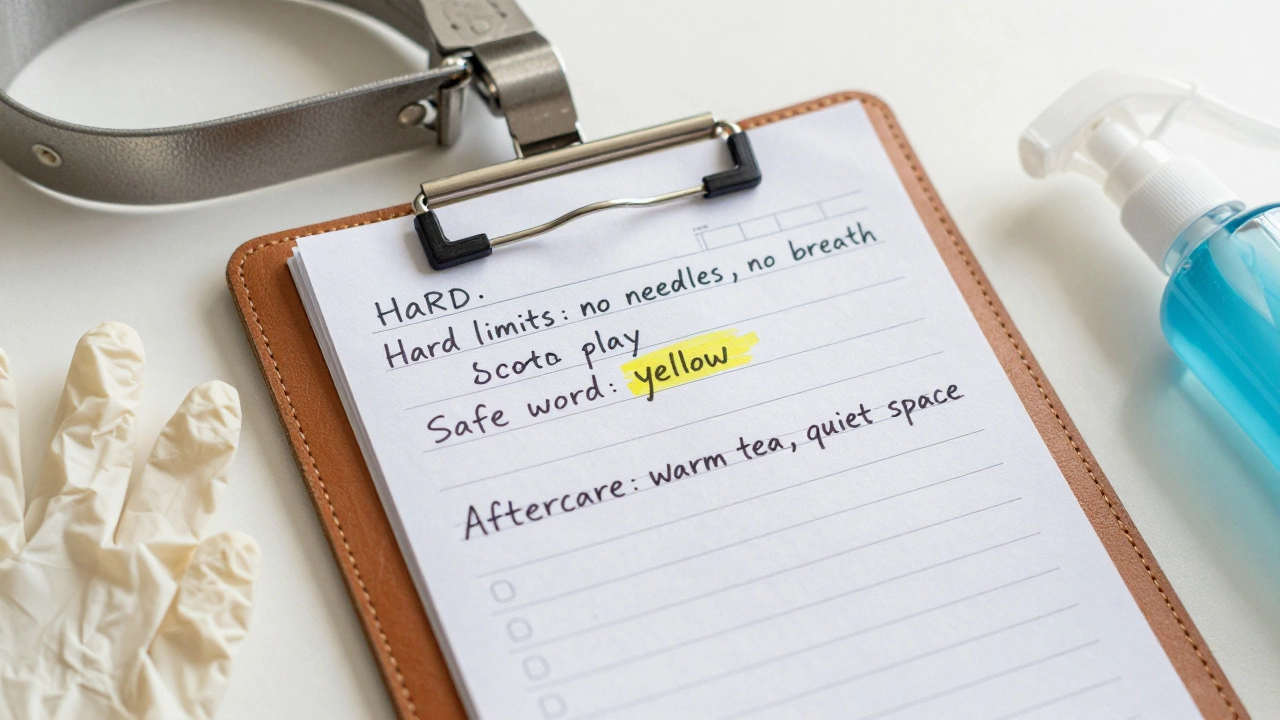
During this talk, you’ll cover:
- Hard limits - things that are NEVER okay, no matter what
- Soft limits - things you’re curious about but unsure about trying
- Safe words - usually a traffic light system: green (keep going), yellow (slow down), red (stop immediately)
- Aftercare needs - do you need cuddling? Water? Silence? A warm blanket?
- Hygiene and safety protocols - gloves, disinfection, clean equipment
Don’t rush this. If a provider refuses to have this conversation, walk away. Real professionals expect it. They’ve seen too many people show up with unspoken trauma or unrealistic expectations. They want you to leave feeling empowered, not violated.
What Not to Say (And What to Say Instead)
People often use phrases that shut down real communication:
- “I don’t know what I want.” → Try: “I’ve never done this before. Can you help me explore?”
- “Just surprise me.” → Try: “I’m open to sensation play, but no needles or blood.”
- “You’re the expert, do whatever you want.” → Try: “I trust your skill, but I need to stay in control of my limits.”
Providers don’t want blind obedience. They want informed consent. The best sessions happen when both people are actively engaged in the process.
Red Flags to Watch For
Not everyone calling themselves a “dominatrix” or “kink professional” is legitimate. Here’s what to avoid:
- They refuse to answer questions about safety or experience
- They pressure you to book quickly or offer “discounts” for skipping the consultation
- They use terms like “hookers in Dubai” or “dubai hookers” as if those are comparable - they’re not. Professional BDSM work is regulated, ethical, and consensual. Those terms refer to illegal, dangerous, and exploitative situations.
- They don’t have a clear booking system or contract
- They make you feel guilty for setting boundaries
If any of this sounds familiar, stop. No session is worth your safety or peace of mind.

After the Session: Aftercare Isn’t Optional
Aftercare is what turns a kinky experience from intense to healing. It’s not just about cleaning up. It’s about emotional recovery.
Many providers offer aftercare as part of the session: a quiet room, warm tea, gentle touch, or just sitting together in silence. Some send a follow-up message the next day. If they don’t, ask. If they refuse, that’s a sign they don’t see you as a person - just a transaction.
Aftercare looks different for everyone. Some need to talk. Others need to be alone. Some cry. Some laugh. All of it’s normal. The provider’s job doesn’t end when the restraints come off.
Why This Matters More Than You Think
BDSM isn’t just about ropes and whips. It’s about trust, communication, and reclaiming agency. For many, working with a professional provider is the first time they’ve ever felt safe enough to be fully themselves. That’s powerful.
And it’s not about replacing relationships. It’s about exploring parts of yourself that might not fit into your everyday life. A good provider helps you do that without judgment, without pressure, and without risk.
There’s no shame in wanting to explore your kink safely. But there’s huge risk in cutting corners. Don’t confuse legality with ethics. Don’t mistake anonymity for safety. And don’t let the noise of illegal services like hookers in Dubai distract you from what real, consensual kink looks like.
Where to Find Reputable Providers
Start with trusted communities. Look for forums like Kinkly, FetLife (with caution), or local BDSM meetups. Ask for referrals. Read reviews that mention safety protocols, not just “hot scenes.”
In Australia, many providers are listed through verified directories like Bound & Gagged or Domme Directory. Check if they have certifications from organizations like the National Coalition for Sexual Freedom or have completed training with groups like The Institute for Sexuality Education.
And remember - price isn’t an indicator of quality. A $500 session isn’t automatically better than a $200 one. What matters is whether they respect your boundaries, communicate clearly, and prioritize your well-being.
Professional BDSM work is growing. More people are seeking it. More providers are stepping forward with integrity. You deserve to be part of that movement - safely, confidently, and on your own terms.